Rearranging Rooms and Words
I got my edit letter, a pull-out couch, and Venus is in Virgo.

My husband and I have wanted to pull the trigger on a pull-out couch in our shared office for years now. The thin, chic, mid-century modern couch we’ve had since our first apartment devolved into a workbench, a 3D to-do list covered in objects to sell or fix. The couch and its contents not only collected dust, it achieved such object permanence it all became virtually invisible to us.
We bought a pull-out. If you’re looking for one, Koala is the best we found. (Not an ad.)
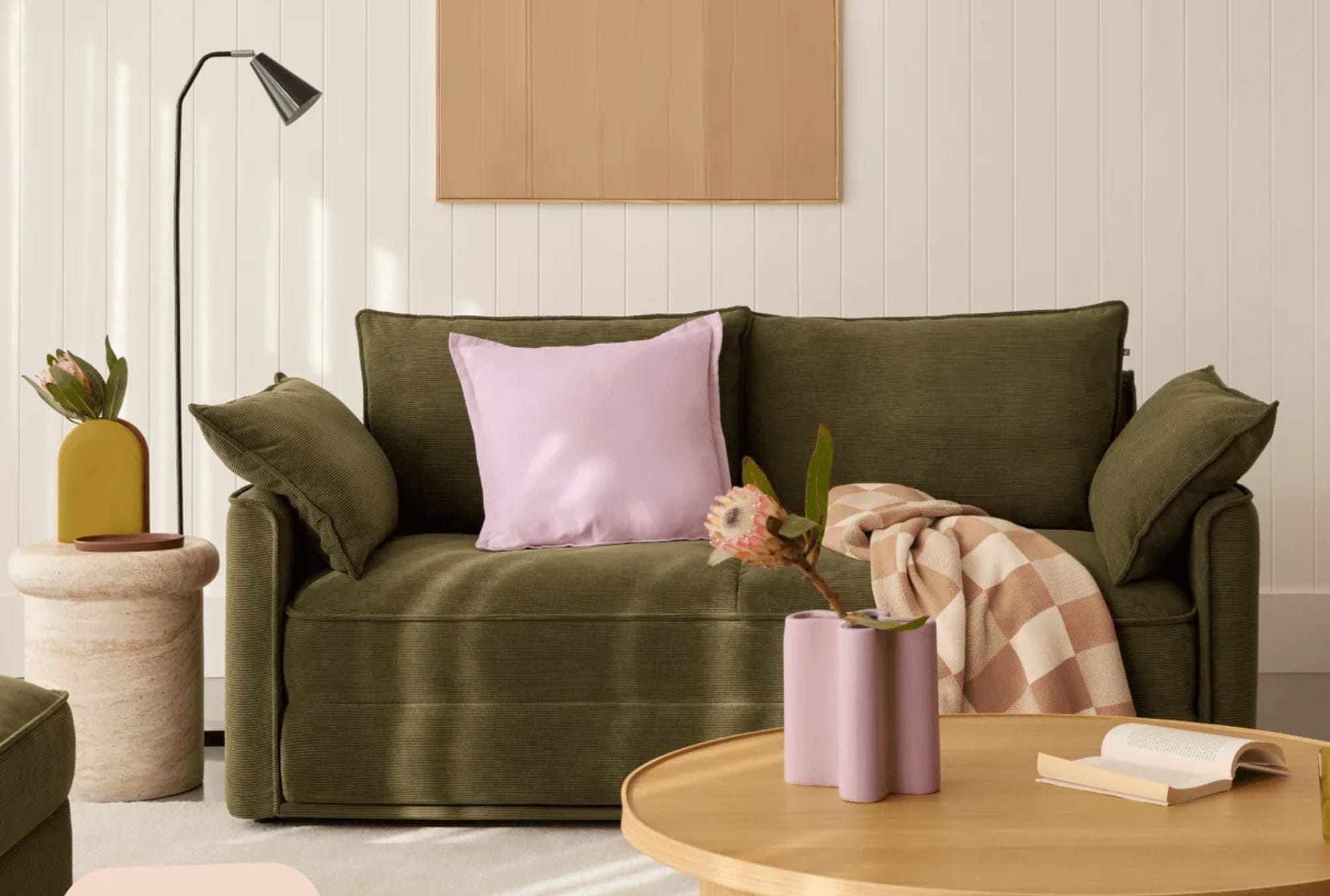
But why, exactly, we purchased the pull-out on this of all weeks—after a month of travel, the week we both broke ground on massive editing projects—I can’t be sure.
Maybe it’s because the pull-out was a Christmas present from my parents and, famously, it’s mid-July now. Maybe it’s an elaborate form of “productive procrastination.” Maybe we’re both just in such editor-brain atm we can’t help but externalize the process: moving around desks and couches instead of scenes and sentences. (He is editing a feature film. I’m revising my novel.)
Jack and I BOTH have Venus in Virgo, so this is all something of a love language between us: projects, protectionism, a meticulous attention to detail and nit-picking. It also makes it very hard for us to cook meals together, and there’s a lot of unsolicited feedback doled out at any given moment. [BREAKING: Upon editing this article, I’ve discovered Venus is in Virgo RIGHT NOW! Until AUGUST 6th!]

In any event: What commenced after we opened those half-dozen Koala boxes was a 72-hour mid-30s gay guy If You Give A Mouse A Cookie domino effect: the moment we assembled the couch we knew we were in big trouble because 1.) we loved it and 2.) it absolutely did not work in our space.
Obviously, I will not be the first or last writer to draw the connection between building then furnishing a home and writing then revising a book. In fact, I think my favorite metaphor for writing a novel comes from Lily King, in conversation with Emma Straub, when King says:
It’s so funny that you use the house metaphor because I always think of a novel as a house and I always say that writing the first draft is like walking up the steps and through the front door (weirdly in my metaphor someone has already built the house and I am sort of coming upon it) and seeing the living room and the kitchen in back and a staircase and then someone—two-thirds of the way through my draft—shoves me down into the basement. It’s always that way. I go through this terrible time when I’m stuck in the basement and can’t find my way out.
I remember somewhere in the dark woods of draft one or two of my forthcoming novel—or maybe it was the hinterland between drafts—I read this quote after finishing King’s perfect novel, Heart the Lover, and thinking: yes. I am in the basement.
Prayerfully, I’ve clawed and climbed my way back up into the house. I’m rearranging the furniture up there, changing out this and that. But as we all know, changes beget changes and what starts as a simple addition or subtraction to a home (or book) can quickly turn into a full-scale remodeling. I’m trying to stop myself from bringing in a wrecking ball, while also trying to avoid the object permanence of any dormant couches.
We started by trying to keep the pull-out couch where the old couch had been. This was the most logical transition. But the pull-out was too big, stuck out like a sore thumb, it ate up the room.
The panic set in (buyer’s remorse, early stages of grief like denial and bargaining, existential crises) and we worked ourselves into a joint tizzy. We could only conceive of the most radical changes. The entire room needed to be turned upside down. We needed to move to a new apartment, a new city, perhaps even end our marriage.
This seems like a common reaction to change. In a room, in a novel. The new element is threatening and destabilizing, calling everything else into question. The small change only works if everything else changes with it. Or maybe it all needs to be new.
So my husband and I went nuclear, disassembling his incredibly intricate desk set-up with its eight hundred and thirty wires leading to and from technological objects I don’t even know what to call (this, after dark, which is never a great time to revise anything1). We completely reserved the room. Desk, monitors, table, chairs, pull-out, piano and bench, rolling cart, side-table all moved in bumper-cars style chaos as we lugged or pushed them into their new homes.
This didn’t work either. It was, in fact, much worse. The room was ruined.
Ten days ago, I got my edit letter and marked up manuscript from my editor.
I’m elated. Not to brag, but my editor is a genius. I feel so lucky and seen. The book, it turns out, is in perfect hands. Her notes all rang true, the kind of feedback that makes you say: “oh my God, of course” or “yes, right, exactly that.” I’m completely caffeinated by the suggested changes. They’re mostly topical and surgical, invitations to dig deeper without any major overhauls or re-breaks (but, trust me, this novel has had more than its fair share of blowups throughout the last three years).
Still, tiny questions and bumps reveal bigger ones. For reasons explained here, I have to be careful not to rush. I have to think everything through, make sure I’m not undoing anything too hastily or radically. Or, if I do, I have to make sure I know my way back across the re-arranged room.

We woke up in the sober light of day and put the desk back on the other side of the room—where it started. Suddenly, the pull-out’s destination was obvious: It belonged against the one and only wall we’d yet to try it against. It fit wonderfully, created a little nook, looked as if it’d been there all along.
It was hard to trust this feeling would hold. We went to our favorite breakfast spot, filled up on mămăligă2, stopped by our favorite thrift store, somehow ended up with a new pendant lamp, and returned back to our work-in-progress.
Jack restored his insanely complicated desk, dusted it off, patched up small holes in the wall, touched it up with fresh paint. The room re-settled. Comically, we decided to change the doors on our cabinets—the wood paneled doors suddenly belonged on the other side of the room, the green doors needed to be farther away from the new green couch and pendant. I ordered a bigger whiteboard; the one currently hosting a loose outline of the first chapters of my second novel will be replaced with art and photos.
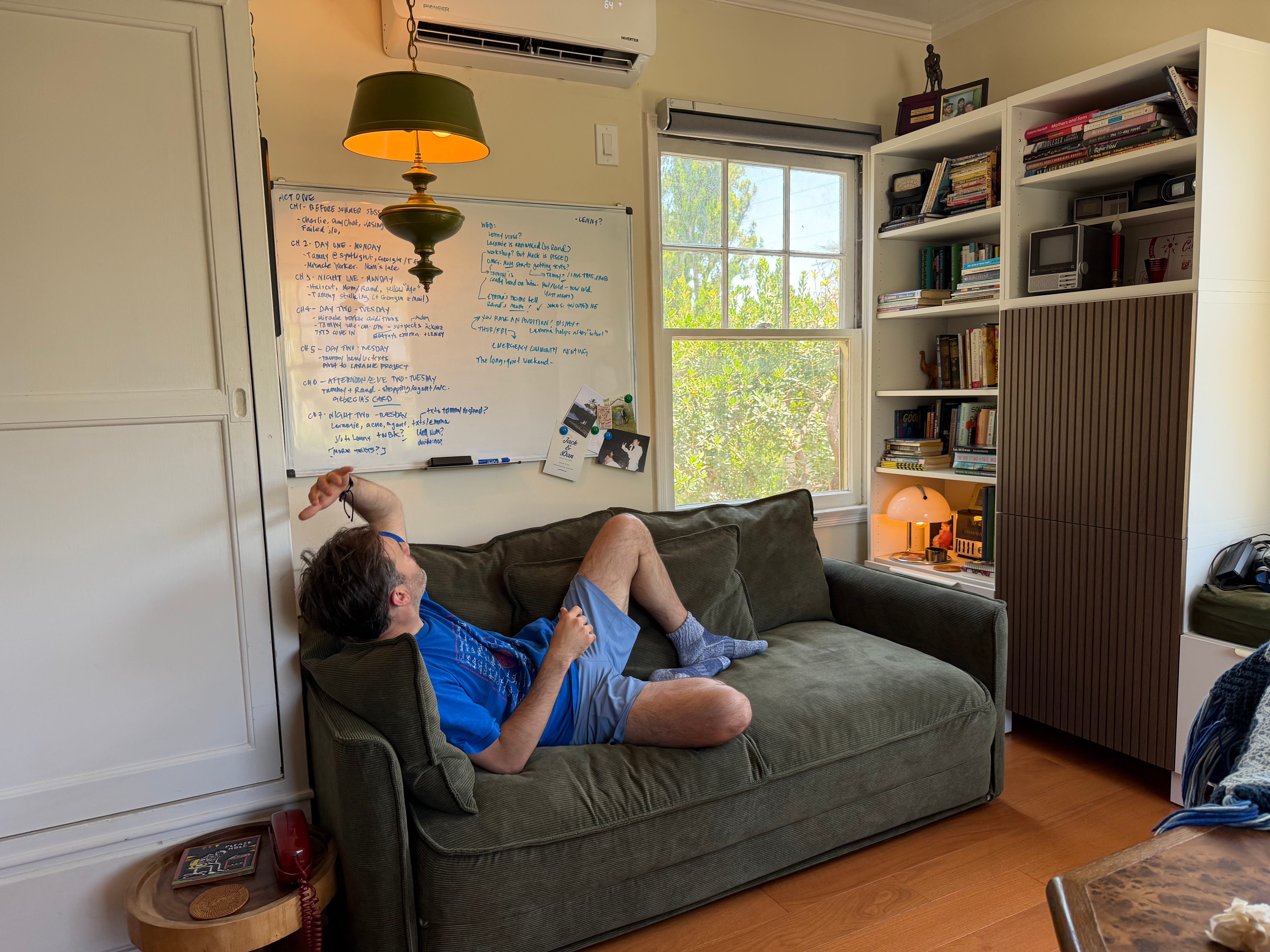
All done, Jack looked at me and said he felt a sudden wave of deja-vu. The room used to be like this, he insisted. We looked through our camera rolls and discovered: when we first moved into this apartment, the old couch had originally been on this side of the room. A lot of effort to end up back where we started, but a complete and total upgrade. I can’t wait to keep editing in here.
xo, Dan
I once had a therapist tell me: “Never believe anything you think about yourself after 10pm.” I’ve decided to apply this to my writing. I try not to believe anything I think about my book after 10pm, either. (But I do, sadly, roll over and write down most of my ideas then.)

DM for location of this perfect dish
Way to go! Fresh day, fresh eyes, fresh air, fresh new room! Yay! (: Doug Foland Portland OR.